
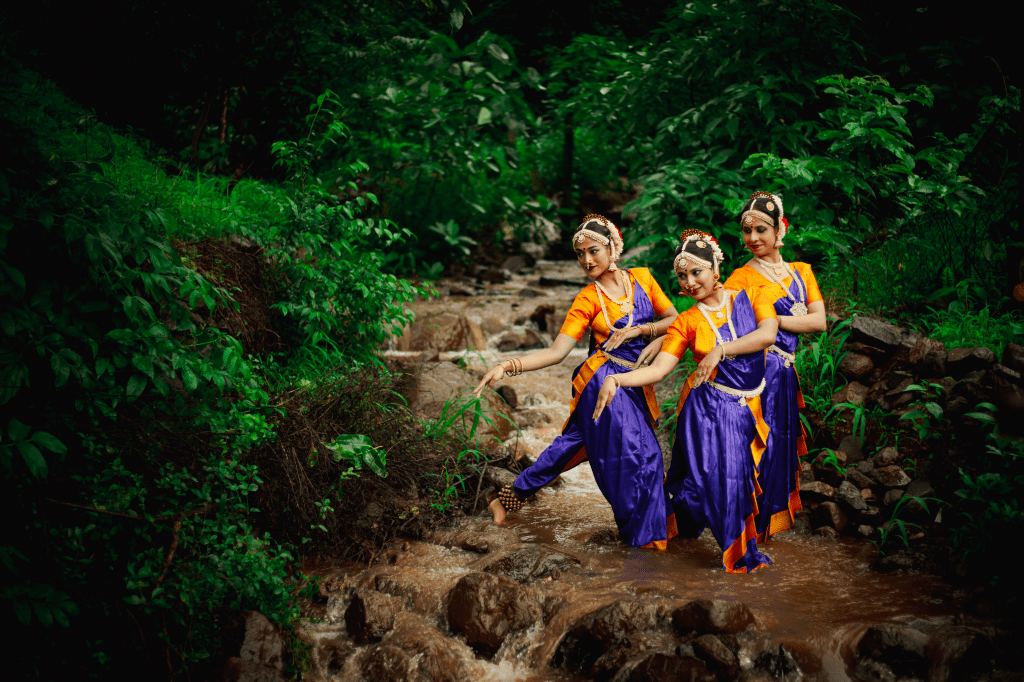
Triveni- The Divine Confluence 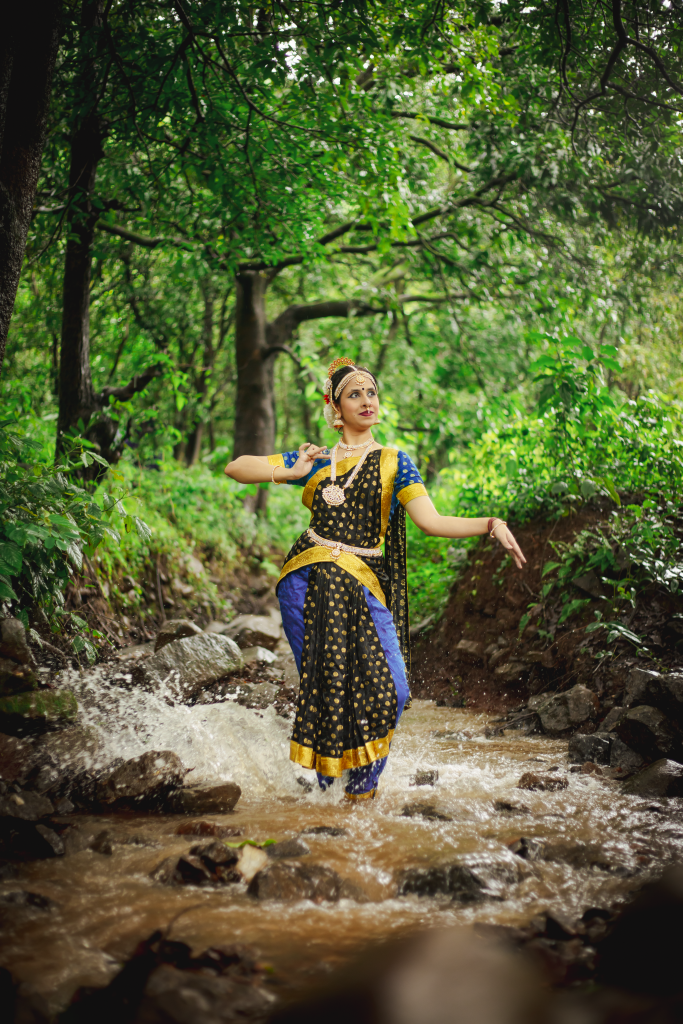
Ganga | The Soul | Power 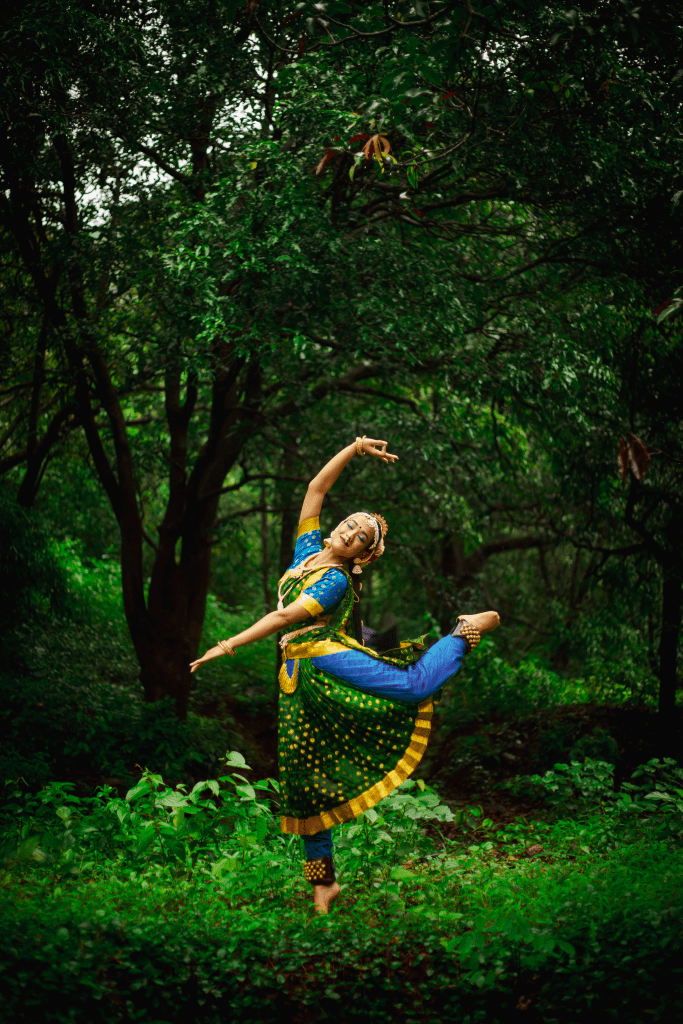
Yamuna | The Body | Playfulness 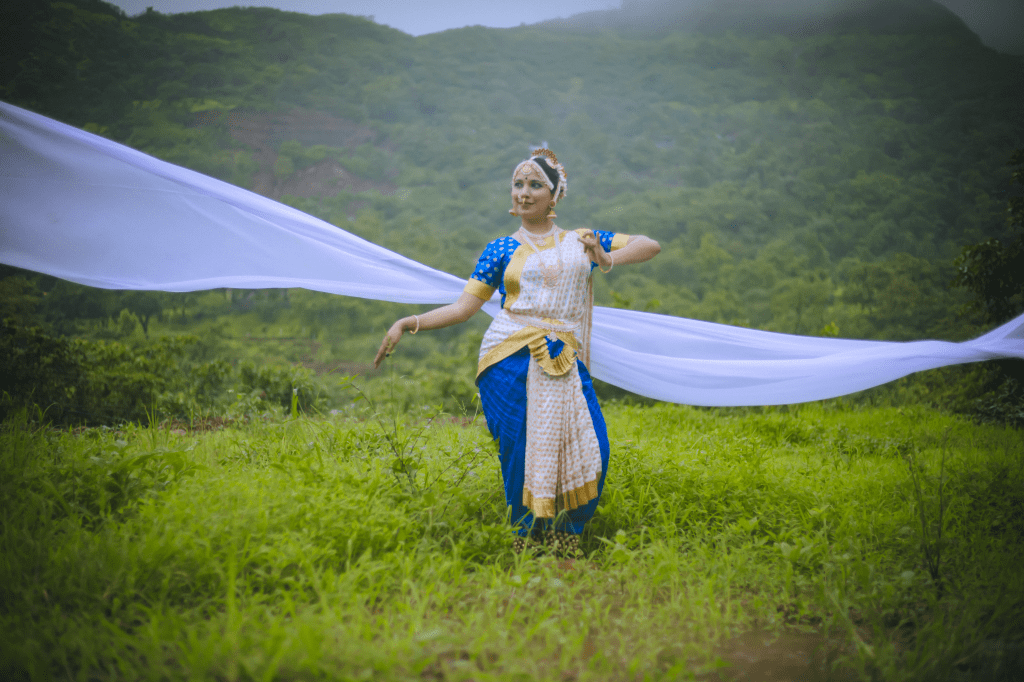
Saraswati | The Mind | Poise
Triveni: The Divine Confluence
Triveni is a thematic Bharatnatyam repertoire exploring the three Divine rivers- Ganga, Yamuna, and Saraswati portrayed by Varsha Abichandani Sarsar, Swetha Baruah and Shivani Marwadi Inamdar. Triveni is not only the Sangam of the three rivers but is also a metaphor for the confluence of the mind, body, and soul.
Classical dance is an ever-evolving art form. With that said, we have taken the opportunity to explore and push the boundaries of Bharatnatyam while still maintaining its grammar. The recital follows a traditional Margam- a Pushpanjali, an Alarippu, a Jathiswaram, and so on. The element of surprise lies in the structure of these individual Nrtiyabandhas. It also features new compositions penned by our Guru Shumita Mahajan.
Pushpanjali
The repertoire begins with a welcoming Pushpanjali, seeking blessings of the Gods above. Usually performed at the very beginning of a Margam, this Nritta piece has been fused with a shlok about Goddess Saraswati. The tail end of this piece depicts the story of Lord Brahma, the Divine Creator, bringing the river Saraswati to life; A metaphor for awakening our conscience and our minds.
Alarippu
The next Nrityabandha is not just a regular Alarippu. Composed of basic steps done in three speeds, an Alarippu offers obeisance to the Gods through a series of pure nritta movements. The Ashtamangala tala (11 beats) features an interesting combination of Khanda and Tishra Chapu, perfect for exploring the story of Ganga Avtaran. Here, Lord Shiva breaks Ganga’s pride and ego by pulling her into His locks, from which emerges the five streams of Ganga- Bhagirathi, Alaknanda, Mandakini, Dhauliganga, and Pindar.
Jathiswaram
Deconstructing a traditional Jathiswaram, the Amritvarshini Jathiswaram explores the sustenance of Yamuna and the playfulness of Lord Krishna by fusing Charanams of the Kalinga Narthana Thillana. A traditional Jathiswaram is a pure dance presentation, devoid of any abhinaya, with intricate sequences done on musical notes. However, this dance piece is the narration of how Lord Krishna danced on the head of the mighty evil snake Kaliya, but through the eyes of Kalina a.k.a Yamuna herself.
Varnam
The central and most elaborate piece in a Bharatnatyam Margam is a Varnam. This demanding piece tests the dancer’s training, skill, stamina, and ability to seamlessly alternate between pure nritta and abhinaya. The essence of this particular Varnam lies in the intricacies of the Trikala Jathi done at the beginning, where each Laya (speed) consists of different Nadais and Gatis of Tishra, Khanda, and Mishra. A synchronized weaving of the three melodious yet powerful Ragas- Bhairavi, Saraswati, Bageshree further adds to the beauty of this Varnam penned by Guru Shumita Mahajan, musically composed by Dr. Somia Nedungadi. The Triveni Varnam which is the crux of this repertoire also happens to be about the Sangam of the three rivers, which symbolizes the confluence of the mind, body, and soul.
Mata Triveni Trayiratnaveni, Srimat Prayage Jayati Triveni!
Interval
Kriti
Known by many for its complicated yet mesmerizing Swara, the Kapali Sthavan is a powerful Kriti sung in praise of Lord Shiva. Interspersed with Shlokas recited in the name of Uma Pati (Shiva), Ganga narrates stories and her absolute reverence to the Lord who lifted Uma’s curse by assuring her eternal purity.
Ashtapadi
Ashtapadis are delicate Sanskrit hymns of the Gita Govinda composed by Jayadeva describing the beauty of Lord Krishna. Considered a masterpiece, this particular Ashtapadi- Sakhiye beautifully details the love between Krishna and Radha and introduces the theme of ‘Divine romance.’ Here, Radha recalls her first encounter with Krishna and coyly narrates her experience to her Sakhi Yamuna. It is believed that Yamuna is an extension of Radha herself, thus explaining the shared feeling of romance for Lord Krishna.
Poem
The next Nrityabandha is a poem on Saraswati penned by Guru Shumita Mahajan. The poem questions the fate of the Hindu Goddess of knowledge, music, art, and wisdom who seems to have perished in today’s materialistic world. Have we become so ignorant and tainted with woes around us that we forget our conscience?
Thillana
A Thillana is a captivating and lively segment in the repertoire that serves as a rhythmic conclusion to the Margam. Traditionally, this particular Thillana is in praise of Lord Krishna who resided along Yamuna. We have taken the creative liberty to add two more charanams, one in praise of Lord Shiva atop whose head sits Ganga, and Goddess Saraswati, the one who protects the four Vedas. The marvelous rhythmic structure of the raga adds to the ultimate joy as the three rivers yet again merge creating the union of the body mind and soul.
Mangalam
The Bhairavi Mangalam depicts the power that this union holds. As we conclude, we seek blessings from the Almighty and pray to be conscious in our thoughts like Saraswati, Joyful in our ways like Yamuna, and powerful in our demeanor like Ganga. We pray to Mata Triveni to bless us and seek enlightenment of the body mind and soul.
Jaago Bhairavi!
The following is a table detailing the Margam
| Dance Piece | Raga | Tala | Composer | Performed By |
| Pushpanjali | Saraswati | Adi | Madurai R. Muralidharan | Shivani |
| Allarippu | – | Ashtamangal (11 beats) | Choreographed by Guru Shumita Mahajan | Varsha |
| Jathiswaram | Amritavarshini | Adi | Uma Rao Charanams by Oothukadu Venkata Subbiar | Swetha |
| Varnam | Ragamalika- Bhairavi, Saraswati, Bageshree | Adi | Written by- Guru Shumita Mahajan Composed by- Somia Nedungadi | Trio |
| Kriti | Palini | Tishra nadai Adi | Lalitha Sivakumar | Varsha |
| Ashtapadi | Sudha Sarang | Mishra Chappu | Jayadev | Swetha |
| Poem | – | – | Guru Shumita Mahajan | Shivani |
| Thillana | Brindavani Sarang | Adi | Madurai Shri N Krishnan | Trio |
| Mangalam | Sounds of Isha | Trio |
Orchestra Credits
Nattuvangam: Guru Shumita Mahajan
Vocals: Dr. Somia Nedungadi
Mridangam: Yashwant Hampiholi
Violin: Anantharaman Balasubramanian
Flute: Sunil Avachat
Recording Studio: Shivaranjani Recording Studio- Omkar Kelkar
Audio Credits
Pushpanjali: Link
Ashtapadi: Link
Mangalam: Link
We usher you to kindly rate how you like this performance, and leave your valuable review about the same. It is only through constant feedback and rework can make this experience more enjoyable, entertaining, and enlightening.


